
Diabetic Foot & Wound Care
Persistently high blood sugar damages nerves and blood vessels over time, leading to diabetic neuropathy, poor circulation and loss of protective sensation in the feet. Even a small blister, cut or callus can then progress into a non-healing wound or foot ulcer - and, without timely specialist care, to infection, gangrene and amputation.
Dr. Shetty's Diabetic Foot and Wound Care Centre, a dedicated speciality of Tara Healthcare in Bangalore, brings diabetic foot screening, advanced wound care, infection control, reconstructive surgery and structured foot care education under one roof - with the goal of complete healing, preventing recurrence and preserving the limb.
High blood sugar damages the nerves and blood vessels of the feet, so even a small blister or cut can become a non-healing wound or ulcer. Early specialist care prevents infection and amputation.
Our centre brings screening, advanced wound care, infection control, reconstructive surgery and foot care education under one roof - focused on healing and limb preservation.
- Numbness, tingling or a burning sensation in the feet
- Corns, calluses, cracks, blisters or colour changes
- Wounds that do not heal within 1-2 weeks
- Infected ulcers with discharge or foul odour
- A history of foot ulcers or previous amputation
- Poor circulation or peripheral arterial disease (PAD)
- Numbness, tingling or burning in the feet
- Corns, calluses, cracks or colour changes
- Wounds not healing within 1-2 weeks
- Infected ulcers, or a history of ulcers
- Poor circulation (PAD)
Step-by-Step Care
01 Screening & Assessment
A detailed foot examination and ulcer assessment, neuropathy testing, vascular evaluation with Doppler and ABI, X-ray or MRI where bone infection must be ruled out, and a review of blood sugar management.
02 Personalised Treatment Plan
Based on the findings, a plan is created for you - combining debridement, antibiotics, dressing protocols, offloading strategies and patient education.
03 Debridement & Infection Control
Necrotic or infected tissue is removed surgically or medically, infection is controlled with targeted antibiotics, and moisture-balanced sterile dressings are tailored to the stage of the wound.
04 Advanced Wound Healing Therapies
Depending on severity, treatment may include PRP therapy, PDRN therapy for tissue regeneration, Negative Pressure Wound Therapy (NPWT), and bioengineered or advanced wound dressings.
05 Offloading & Diabetic Footwear
Improper footwear is a major cause of recurrence. We provide diabetic shoe fitting, custom shoes, insoles and braces, and pressure-relieving offloading devices to protect healing tissue.
06 Follow-up & Prevention
Regular reviews monitor healing, with foot care education, blood sugar control and routine screening to prevent the wound returning.
Every patient follows a structured pathway, so that no step is missed - from the first assessment to long-term prevention.
Healing, Offloading & Prevention
Post-procedure care is critical for a successful outcome. Here is what your care includes after treatment.
Guidance on keeping the wound clean and dry, exactly as advised by your care team.
Dressings are changed on a schedule suited to the stage of your wound.
Custom diabetic shoe fitting and orthotic support relieve pressure on healing tissue.
Pain management and physiotherapy when needed, to keep you moving safely.
Regular follow-up visits monitor healing and catch problems early.
- Neuropathy reduces pain sensation, so injuries go unnoticed
- Poor circulation limits oxygen and nutrients reaching the tissue
- An impaired immune response increases infection risk
- Repeated pressure and friction while walking
- Delayed tissue regeneration in long-standing diabetes
- Daily foot inspection and good hygiene
- Proper, well-fitted footwear
- Blood sugar control
- Routine diabetic foot screening
- Early review of any wound, swelling or colour change
Benefits of Choosing Us
Structured Care Pathway
A defined pathway from assessment to prevention ensures that no step in your care is missed.
Personalised Plans
Every plan is built around the individual patient's wound, circulation, sensation and overall health.
Multidisciplinary Team
Podiatric, vascular and wound care expertise work together on each case.
Focus on Prevention
Screening, footwear and education aim to reduce recurrence and avoid amputation.
Limb-Salvage Expertise
Dr. Karan Shetty is a board-certified plastic surgeon with expertise in reconstructive and limb-salvage surgery, treating the tissue loss, infection and deformity behind a wound.
Everything Under One Roof
Screening, advanced wound care, vascular assessment, infection control, reconstructive surgery and foot care education in a single centre.
Cost of Diabetic Foot Care
The cost depends on the stage of the wound, the therapies required and the length of treatment. Our team also assists with insurance coordination. You will receive a clear estimate after your assessment.
Request a Quote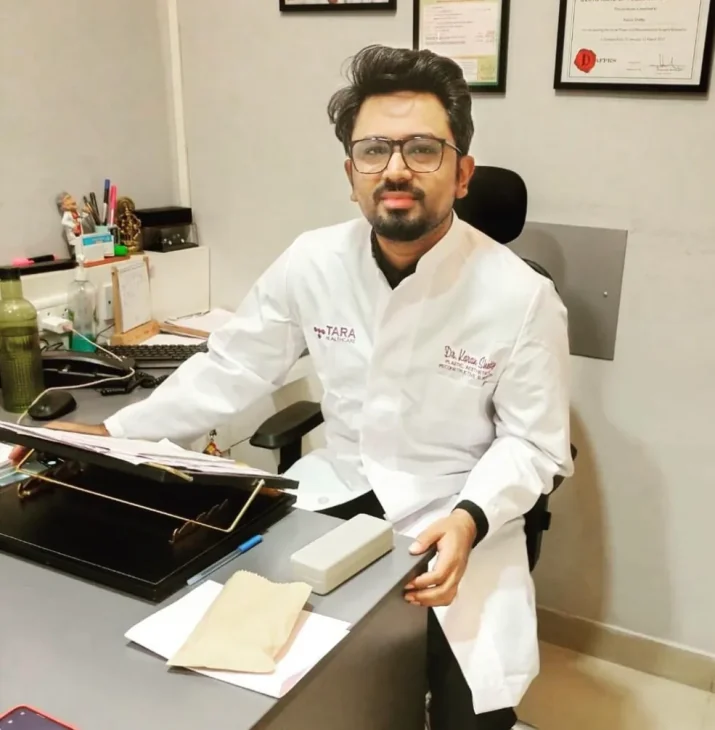
Led by Dr. Karan Shetty
MBBS, M.S,M.ch (Plastic Surgery) Plastic, Aesthetic & Reconstructive Surgeon Fellowship Super microsurgery (Tokyo), DAFPRS (Germany) and University Hospital Moncloa (Spain)
Dr. Karan Shetty is a Board-Certified Plastic, Aesthetic & Reconstructive Surgeon. He is a dynamic surgeon with special interest in Aesthetic surgery. He has completed his training in Super microsurgery from the University of Tokyo, Japan.
He was selected for the prestigious DAFPRS (Dutch Association of Facial Plastic & Reconstructive Surgeons) Fellowship in Rhinoplasty & Facial Aesthetics in Stuttgart, Germany.
Dr. Karan Shetty is a Board-Certified Plastic Surgeon with a special interest in aesthetic surgery. He was selected for the prestigious DAFPRS Fellowship in Rhinoplasty & Facial Aesthetics in Stuttgart, Germany.
Find Answers to
Your Questions
Common questions about diabetic foot and wound care. If yours isn't here, our coordinators are a message away.
Can diabetic foot ulcers heal without amputation?
When should I see a diabetic foot specialist?
What is advanced diabetic wound care?
Why do diabetic foot ulcers develop?
How can diabetic foot ulcers be prevented?
How do I know if a diabetic foot infection is serious?
Is amputation always necessary for severe diabetic foot ulcers?
What are the latest treatments available for diabetic wounds?
How should I care for a diabetic foot wound at home?
Can diabetic neuropathy be reversed?
How often should a diabetic foot wound be examined by a specialist?
Does insurance cover diabetic foot and wound treatments?
Get in touch
We'd love to hear from you. Our friendly team is always here to chat.
Get in touch to book
your first
Appointment
You can reach us anytime via info@tarahealthcare.co.in