
What is Hair Transplantation?
What is a Hair Transplant?
A hair transplant is a surgical hair-restoration procedure in which healthy hair follicles are harvested from a donor area—usually the back or sides of the scalp—and transplanted into areas affected by thinning or baldness. The transplanted follicles continue to grow naturally in their new location, creating fuller and more natural-looking hair over time. Tara describes hair transplantation as a long-term treatment for hair loss, with results supported by appropriate aftercare and maintenance. Restore your hairline. Rebuild density. Restore confidence. Is Hair Transplant Right for You? You may be considered if you have: Male pattern baldness Female pattern hair loss Receding hairline Crown thinning Localised bald patches Hair loss following injury or scarring Sufficient donor hair Stable expectations about the outcome This should be a visual diagnostic section. Male Pattern Hair Loss Genetic hair loss commonly affecting the hairline, temples and crown. Female Pattern Hair Loss Often presents as diffuse thinning and increased scalp visibility. Crown Thinning Loss of density around the crown requires careful planning around the natural hair whorl. Scar-Related Hair Loss Hair transplantation can be considered to restore hair over selected scars caused by injury or burns. Which Hair Transplant Technique Is Right for You? FUE — Follicular Unit Extraction Individual follicular units are harvested from the donor area and transplanted into the recipient area. Manual extraction Motorised extraction Tiny extraction points No linear donor scar Minimally invasive harvesting FUT — Follicular Unit Transplantation A strip of scalp tissue is removed from the donor area and individual grafts are dissected under magnification before transplantation. FUE + FUT Combination For selected patients with advanced baldness, FUE and FUT can be combined to maximise available graft yield. The Hair Transplant Journey 01 — Consultation & Hair Assessment Your hair loss pattern, scalp condition, donor density and future hair-loss pattern are assessed. 02 — Hairline Design The hairline is planned according to facial proportions, age, existing density and long-term expectations. 03 — Donor Hair Harvesting Healthy follicles are harvested from the selected donor area. 04 — Graft Preparation The follicles are carefully prepared for transplantation. 05 — Recipient Site Creation Tiny recipient sites are created following the planned hair direction and density. 06 — Follicular Placement Individual grafts are strategically placed to create a natural-looking hairline and density. 07 — Recovery & Follow-Up Your scalp is monitored and aftercare guidance is provided throughout the recovery process. Advanced Hair Restoration Natural Hairline Design The objective is not simply to fill bald areas. It is to recreate a hairline that follows natural growth direction and looks appropriate for your facial structure. Crown Hair Transplant Crown transplantation requires careful attention to the natural hair whorl and direction of growth. HAIRever specifically identifies crown restoration as an advanced case requiring high surgical skill. Beard & Moustache Transplant Hair transplantation can also be used to improve beard and moustache density. Beard-to-Scalp Transplant When scalp donor hair is limited, beard follicles may be considered as an additional donor source in selected cases. Body-to-Scalp Transplant For advanced cases with limited scalp donor availability, body hair may be considered as an additional donor source. Scar Hair Transplant Hair can be transplanted into selected areas of hair loss caused by burns, injuries or other scars.
What is a Hair Transplant?
A hair transplant is a surgical hair-restoration procedure in which healthy hair follicles are harvested from a donor area—usually the back or sides of the scalp—and transplanted into areas affected by thinning or baldness. The transplanted follicles continue to grow naturally in their new location, creating fuller and more natural-looking hair over time. Tara describes hair transplantation as a long-term treatment for hair loss, with results supported by appropriate aftercare and maintenance. Restore your hairline. Rebuild density. Restore confidence. Is Hair Transplant Right for You? You may be considered if you have: Male pattern baldness Female pattern hair loss Receding hairline Crown thinning Localised bald patches Hair loss following injury or scarring Sufficient donor hair Stable expectations about the outcome This should be a visual diagnostic section. Male Pattern Hair Loss Genetic hair loss commonly affecting the hairline, temples and crown. Female Pattern Hair Loss Often presents as diffuse thinning and increased scalp visibility. Crown Thinning Loss of density around the crown requires careful planning around the natural hair whorl. Scar-Related Hair Loss Hair transplantation can be considered to restore hair over selected scars caused by injury or burns. Which Hair Transplant Technique Is Right for You? FUE — Follicular Unit Extraction Individual follicular units are harvested from the donor area and transplanted into the recipient area. Manual extraction Motorised extraction Tiny extraction points No linear donor scar Minimally invasive harvesting FUT — Follicular Unit Transplantation A strip of scalp tissue is removed from the donor area and individual grafts are dissected under magnification before transplantation. FUE + FUT Combination For selected patients with advanced baldness, FUE and FUT can be combined to maximise available graft yield. The Hair Transplant Journey 01 — Consultation & Hair Assessment Your hair loss pattern, scalp condition, donor density and future hair-loss pattern are assessed. 02 — Hairline Design The hairline is planned according to facial proportions, age, existing density and long-term expectations. 03 — Donor Hair Harvesting Healthy follicles are harvested from the selected donor area. 04 — Graft Preparation The follicles are carefully prepared for transplantation. 05 — Recipient Site Creation Tiny recipient sites are created following the planned hair direction and density. 06 — Follicular Placement Individual grafts are strategically placed to create a natural-looking hairline and density. 07 — Recovery & Follow-Up Your scalp is monitored and aftercare guidance is provided throughout the recovery process. Advanced Hair Restoration Natural Hairline Design The objective is not simply to fill bald areas. It is to recreate a hairline that follows natural growth direction and looks appropriate for your facial structure. Crown Hair Transplant Crown transplantation requires careful attention to the natural hair whorl and direction of growth. HAIRever specifically identifies crown restoration as an advanced case requiring high surgical skill. Beard & Moustache Transplant Hair transplantation can also be used to improve beard and moustache density. Beard-to-Scalp Transplant When scalp donor hair is limited, beard follicles may be considered as an additional donor source in selected cases. Body-to-Scalp Transplant For advanced cases with limited scalp donor availability, body hair may be considered as an additional donor source. Scar Hair Transplant Hair can be transplanted into selected areas of hair loss caused by burns, injuries or other scars.
- Age 18 and above (nasal is fully developed)
- Non-smoker in good overall health
- Realistic expectations about surgical outcomes
- Seeking cosmetic refinement or functional correction
- Age 15 and above (nose is fully developed)
- Non-smoker in good overall health
- Realistic expectations about surgical outcomes
- Seeking cosmetic refinement or functional correction
Step-by-Step Guide
01 Anaesthesia
General anaesthesia is administered by our experienced anaesthetist, ensuring you are completely comfortable and pain-free throughout the procedure.
02 Incisions
Small, precise incisions are made — typically hidden inside the nostrils (closed) or across the columella (open) approach.
03 Reshaping the Structure
Bone and cartilage are carefully refined, reduced or augmented to achieve the shape agreed during planning.
04 Closing Incisions
Incisions are closed with fine sutures, and the newly shaped framework is secured in place.
05 Splint & Recovery
A lightweight splint supports the nose while it heals. Most of it is removed within one week.
Every procedure at Tara Healthcare follows a precise, evidence-based surgical pathway designed for safety and natural results.
Post-Op Expectations
First Few Days The scalp may experience mild swelling, redness or tenderness. The transplanted area begins healing and the scalp gradually returns to normal. Following Weeks The transplanted hair may initially shed. This does not necessarily indicate failure of the transplant. Following Months New hair growth develops progressively as the transplanted follicles enter their natural growth cycle. The exact timeline should be explained individually during consultation rather than promising a fixed result.
Rest at home with your head elevated. Swelling and bruising are at their peak - this is completely normal.
Splint and most sutures are removed. Most patients return to desk-based work and social activities by day 10.
Light walking is encouraged. Avoid strenuous exercise, swimming, and direct sun exposure to the nose.
Majority of swelling has resolved. The new shape is clearly visible and continues to refine.
Residual swelling - especially at the tip - fully resolves. Your final result is fully visible.
- Scratching or picking the scalp
- Direct trauma to transplanted grafts
- Intense physical activity until cleared
- Unapproved hair products during early recovery
- Smoking
- Missing follow-up appointments
- Scalp Care
- Follow the washing and scalp-care instructions provided after surgery.
- Medical Support
- Your team monitors healing and graft survival.
- PRP / Growth-Factor Support
- PRP can be incorporated into selected hair-restoration plans to support scalp health and recovery. Tara's HAIRever unit specifically offers PRP alongside transplant procedures.
- Long-Term Maintenance
- Existing non-transplanted hair can continue to thin, so long-term medical management may be recommended depending on the cause of hair loss.
Benefits of Choosing Us
HAIRever
, a dedicated hair-transplant and restoration unit focused on surgical hair restoration.
Dr. Karan Shetty
and supported by Dr. Keertana Devasani, according to Tara's current HAIRever material.
Crisalix 3D Simulation
See your expected outcome before surgery with Crisalix 3D imaging - helping you set realistic goals and build confidence in your decision.
Board-Certified Safety
All procedures follow the highest international safety standards, performed in fully equipped procedure rooms with experienced anaesthesia support.
Personalised Planning
No two noses are the same. Surgical planning is individualised during a dedicated pre-op consultation including full facial analysis.
End-to-End Care
From pre-operative testing through to long-term follow-up, our team is with you at every stage - including 24/7 post-op nursing support.
Cost of Rhinoplasty
How Much Does a Hair Transplant Cost? The cost is personalised according to: Number of grafts required Hair-transplant technique Donor-area availability Extent of baldness Complexity of the case Surgeon expertise Additional treatments required Tara's HAIRever content specifically states that cost is determined by graft count, technique, donor area and case complexity, with a personalised estimate provided upfront. Get Your Personalised Hair Restoration Plan
Request a QuoteBefore & After
A Hairline Designed for You. Your Hair Restoration Team Dr. Karan Shetty Board-Certified Plastic, Aesthetic & Reconstructive Surgeon Dr. Keertana Devasani Board-Certified Plastic Surgeon
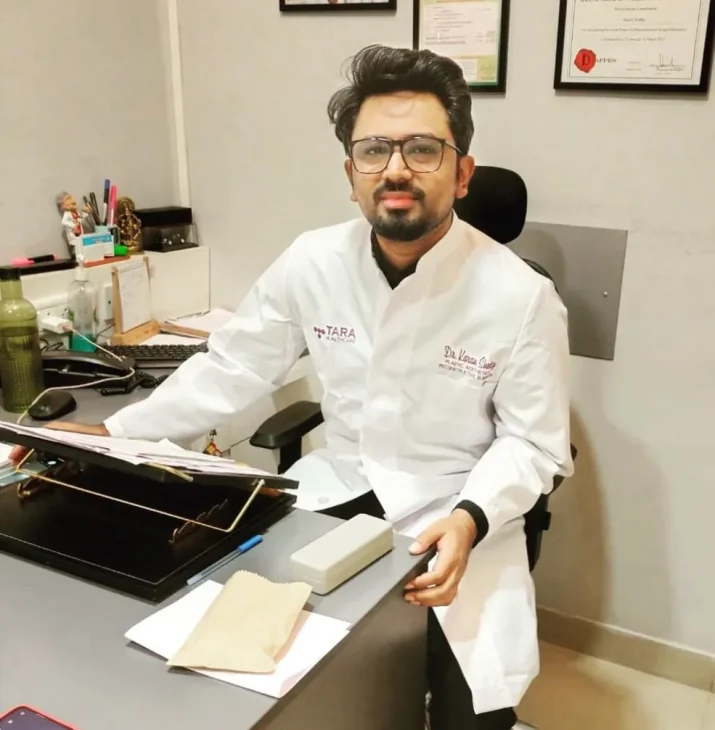
Bangalore's Leading Plastic Surgeon
MBBS, M.S,M.ch (Plastic Surgery) Plastic, Aesthetic & Reconstructive Surgeon Fellowship Super microsurgery (Tokyo), DFAFPRS (Germany) and University Hospital Moncloa (Spain)
Dr. Karan Shetty is a Board-Certified Plastic, Aesthetic & Reconstructive Surgeon. He is a dynamic surgeon with special interest in Aesthetic surgery. He has completed his training in Super microsurgery from the University of Tokyo, Japan.
He was selected for the prestigious DAFPRS (Dutch Association of Facial Plastic & Reconstructive Surgeons) Fellowship in Rhinoplasty & Facial Aesthetics in Stuttgart, Germany.
Dr. Karan Shetty is a Board-Certified Plastic Surgeon with a special interest in aesthetic surgery. He was selected for the prestigious DAFPRS Fellowship in Rhinoplasty & Facial Aesthetics in Stuttgart, Germany.
Find Answers to
Your Questions
Still have questions? Below are the most common queries. If yours isn't here, our coordinators are a message away.
Is Rhinoplasty safe?
What is the best age for rhinoplasty?
How much does the surgery cost?
How long is the recovery?
Will there be visible scars?
Can rhinoplasty fix breathing issues?
How long until I see final results?
Get in touch
We'd love to hear from you. Our friendly team is always here to chat.
Get in touch to book
your first
Appointment
You can reach us anytime via info@tarahealthcare.co.in